
ASC 4411LN
Uniaxial, capacitive
Measurement range: ±2 to ±400 g
Noise density: 7 to 400 µg/√Hz
Frequency range (±5 %): DC to 2000 Hz

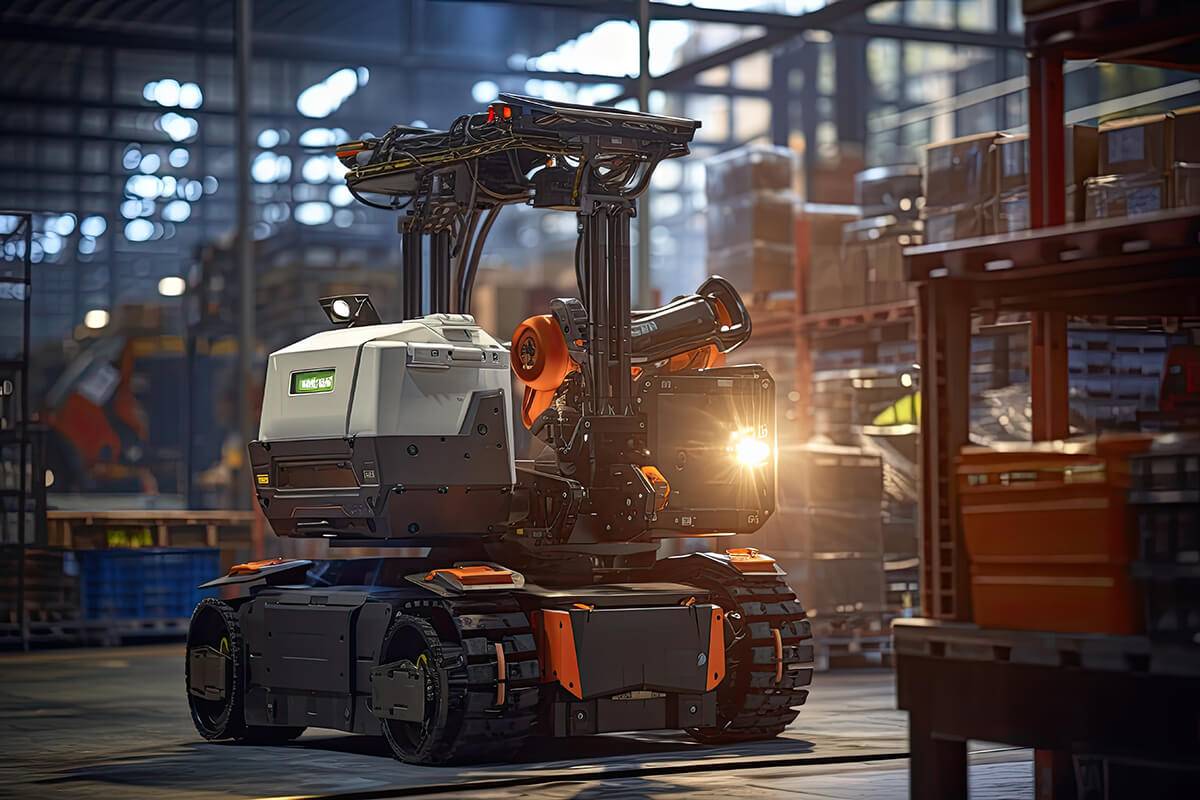
Automated guided vehicles (AGVs) play a crucial role in smart factories and warehousing. They connect individual process steps and optimize overall efficiency. This usually means that human specialists can focus on high-value adding tasks like stage-gate decision making or analyzing outcomes to adjust key parameters. While driverless AGVs and other robotic systems perform all necessary steps to seamlessly operate the end-to-end workflow.
For this to achieve the intended smooth, well-coordinated automation flow of materials, products and processes, exact navigation of these vehicles is essential. ASC precision sensor technology and the company’s modular ASC IMU 7 – allowing engineers to tailor it to custom requirements – enable safe, efficient AGV operation.
An IMU (Inertial Measurement Unit) is an electronic device measuring accelerations and angular rates in all six degrees of freedom. Typically composed of three accelerometers and three gyroscopes, it keeps all essential sensors for AGV position control and navigation together in one single, compact, robust housing.
Inertial sensors are also leveraged to ensure the safety, navigation, vehicle dynamics and passenger comfort of most types of transport – for cargo and people. In aviation, for example, IMUs are leveraged as part of attitude heading reference systems (AHRS). By capturing the subtlest changes in roll, pitch and yaw angles, they help determine exact position, speed and flying attitude of an aircraft in relation to the ground. Helping with the task of extreme-precision position and navigation control are ASC 281 (uniaxial) and ASC 283 (triaxial) gyroscopes, with a bias stability of < 0.1 °/h that enables the required level of accurate real-time measurements.
According to the World Shipping Council, over 90% of global trade is carried via sea. ASC’s robust sensor technology and IMUs are in high demand to help guide ocean liners and container vessels. In semi-autonomous shipping, smart sensors continuously determine and transmit the exact position of watercraft. With large ships reacting slowly, required course corrections need to be calculated and initiated in real-time. To keep passengers safe and cargo on time.
In rail transport, a large variety of ASC inertial sensors operate 24/7 to keep freight trains on track and to their busy schedules; to ensure bridge and tunnel safety, as well as constantly monitor and proactively maintain tracks, catenaries and other railway infrastructure.
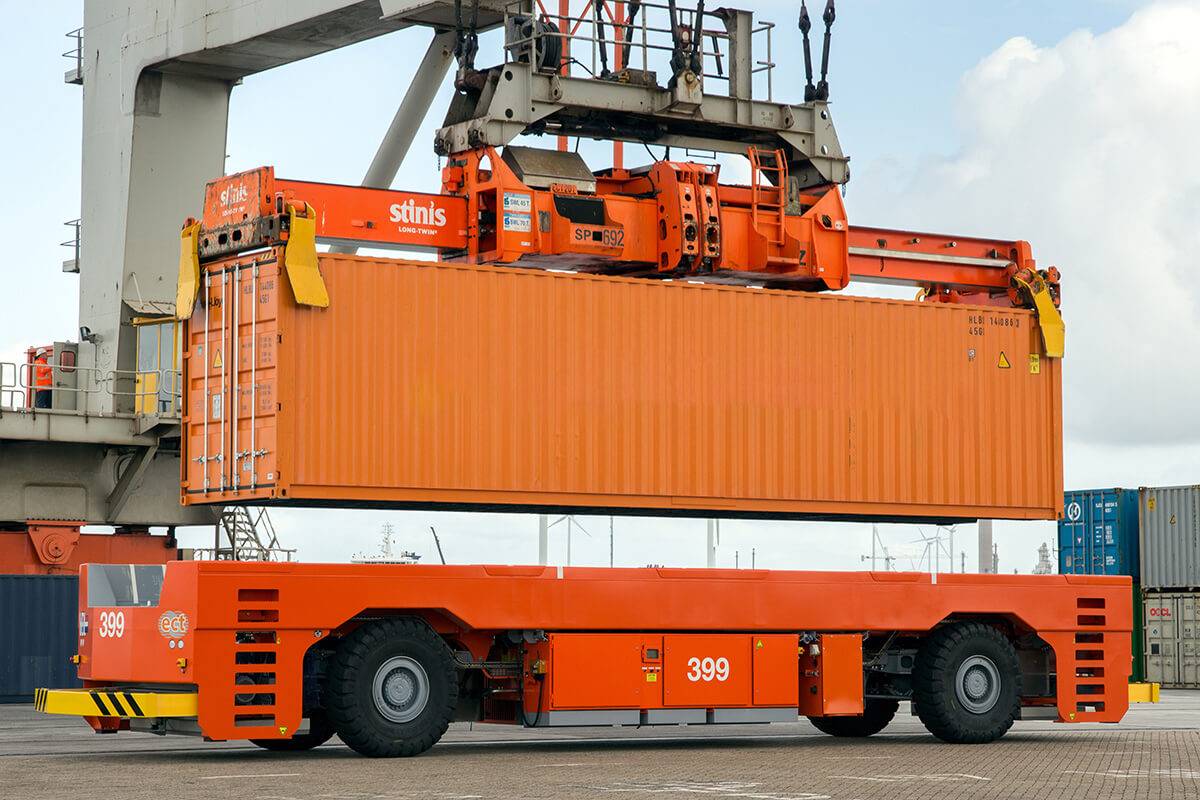
Regardless of mode, international shipping of goods large and small is a massive, complex logistical operation. A significant portion of which accumulates towards the year-end festive period. This annual surge puts enormous pressure on container ports, air cargo, railway and truck freight terminals and distribution centers – as timely delivery becomes crucial.
Here, too, AGVs play a critical role. They come in various sizes and designs, for example tractors for transporting trailers, or forklift trucks to move pallets and containers. Some AGVs move along fixed routes, guided by forced control systems. Others navigate freely, guided by lasers, radars, radio direction or environmental features. Every driverless transport system must be equipped with precision sensors for reliable navigation.
The more complex routing becomes in terms of degrees of freedom of movement, the more powerful sensor systems are required. ASC 271 (uniaxial) and ASC 273 (triaxial) gyroscopes enable maximum sophistication and form critical components of rout guidance systems in container terminal settings. Based on MEMS vibrating ring elements they capture rotational movements and are, therefore, particularly suitable for optimizing the curve and turning speed of vehicles. Low noise density (0.02 °/s/√Hz) and angular random walk (0.2 °/√h) as well as very good bias stability (12 °/h) enable precise angular velocity measurement. This allows for AGV operational speeds of up to 6 m/s (22 km/h), while preventing cargo from slipping – which is only feasible due to the gyroscopes’ excellent response behavior.
Shorter distances, including the last miles to destination, are typically covered by trucks and delivery vans. To configure commercial vehicles for a long service life in tough day-to-day operating conditions, capacitive ASC accelerometers help optimize vehicle dynamics, component design, material selection, damping measures and overall operational stability.
ASC 5525MF triaxial ‘all-round’ accelerometers are extremely robust and versatile, with broad measuring ranges and wide frequency response to capture low and medium frequencies. After intense test drives have been completed, vehicles undergo a second phase of thorough, weeks-long “shaking” on test benches. This simulates continuous loads over the long term, replicating the movements and stresses that impact the vehicle in real-world use. ASC 5525MF accelerometers meet the requirements of intense vehicle testing exceptionally well. Their compact design facilitates quick installation and removal – a fundamental advantage in NVH (noise, vibration, harshness) and test bench applications.

Heavily stressed components of delivery vans including driver, rear and sliding doors are exposed to extreme loads, too. Imagine you are delivering parcels. Every few minutes you pull open doors and slam them shut again, with varying degrees of force or patience; on level, ascending and descending roads. Guiding the side door manually generates different forces from jerking it open, accelerating and stopping it abruptly. All this hundreds of times a day, six days a week, 45 weeks or more a year.
ASC accelerometers and gyroscopes assist with the adequate dimensioning of vehicle components and dampening vibrations through suitable measures. This helps deliverers meet their schedules to ensure orders arrive in time for the celebrations.
In short: A lot of reliable sensor technology is required to deliver festive magic to our children, families and friends. At ASC Sensors, our team of “Santa’s little helpers” is proud of playing a small yet critical role in keeping holiday warehouse operations, shipping and delivery schedules on track and your loved ones happy!

Uniaxial, capacitive
Measurement range: ±2 to ±400 g
Noise density: 7 to 400 µg/√Hz
Frequency range (±5 %): DC to 2000 Hz

Biaxial, capacitive
Measurement range: ±2 to ±400 g
Noise density: 7 to 400 µg/√Hz
Frequency range (±5 %): DC to 2000 Hz
You are currently viewing a placeholder content from Vimeo. To access the actual content, click the button below. Please note that doing so will share data with third-party providers.
More InformationYou are currently viewing a placeholder content from YouTube. To access the actual content, click the button below. Please note that doing so will share data with third-party providers.
More InformationYou need to load content from reCAPTCHA to submit the form. Please note that doing so will share data with third-party providers.
More Information