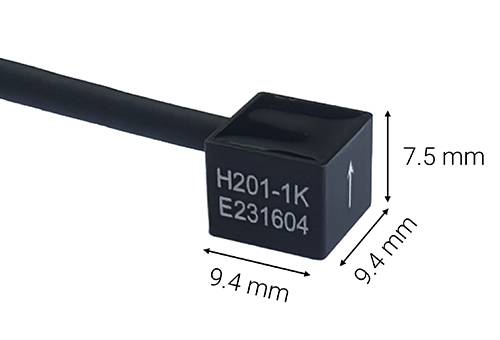
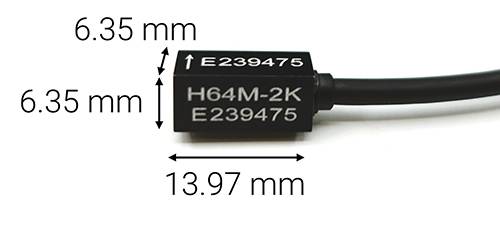
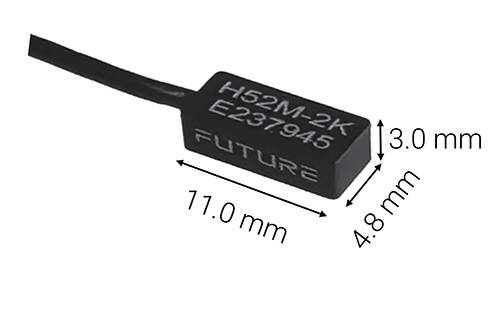
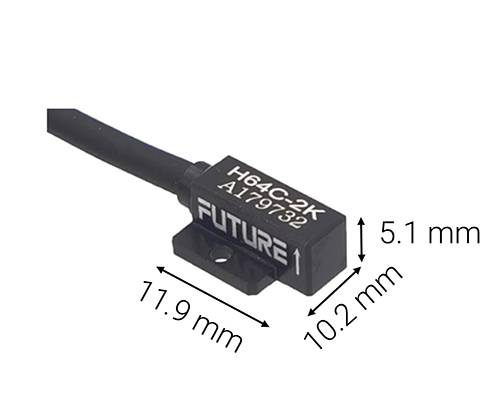
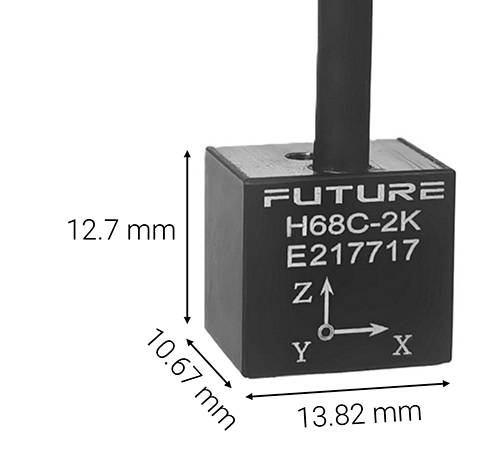
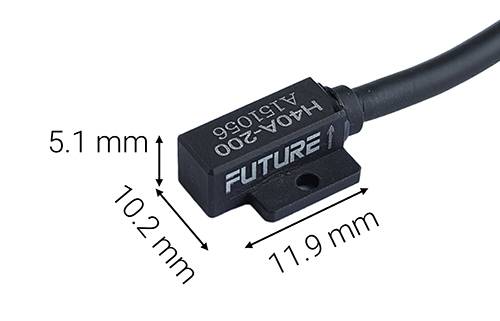
“With Future Tech, we were able to gain an exceptionally competent partner offering excellent sensor products for crash test solutions,” says Renate Bay, Managing Director of ASC Sensors. The Chinese company, headquartered in Shanghai, is considered a global leader in piezoresistive accelerometers. This technology enables the measurement of dynamic and static (constant) accelerations across very wide measurement and frequency ranges. It thus combines key requirements for applications in the areas of full-vehicle testing, tests with dummies (ATD, Anthropomorphic Test Devices) and pedestrian crash tests.
“With this, we are now offering customers across much of Europe the development of specific sensor solutions, including for the field of passive automotive safety,” said Bay. “The Future Tech team stands out for its exceptional expertise and short delivery times, combined with an attractive cost structure.” Future Tech was founded in 2015 by experienced sensor industry experts with international backgrounds. Since then, the company has continued to advance piezoresistive sensor technology. Today, it supports international automakers in the rapidly growing Chinese market, as well as European countries including Italy, Spain and the UK.
“We look forward to a strong partnership with ASC,” says Minzhi Liu, CEO of Future Tech. “The ASC team’s high level of technical expertise and extensive market knowledge were deciding factors in our choice. Added to this are their efficient, high-quality services and a solid foundation of trust, which will serve as the basis for our reliable, professional cooperation in the interest of our European customers.”
Piezoresistive sensor technology
Future Tech’s piezoresistive accelerometers are based on proven MEMS technology. Thanks to their compact design, the sensors are extremely small and lightweight. Depending on the model, their mass ranges from 0.3 to 10 grams. Various assembly options are available for all models. These include the length of the integrated cables, connectors and the integration of Dallas DS2401 chips.
Piezoresistive sensors are based on the property of certain materials to change their electrical resistance when subjected to mechanical deformation. Applied pressure or tension compresses or stretches the material’s crystal structure, causing the measurable resistance to change proportionally. This results in a change in the mobility of the charge carriers within the material, which has a measurable impact on electrical resistance. A circuit known as a Wheatstone bridge converts these minute changes in resistance into a precise, measurable electrical voltage signal.
Key advantages of piezoresistive sensors for automotive testing include:
- Whole-vehicle crash tests: Uniaxial sensors with excellent dynamic response and a wide range of measurement ranges (100–6000 g) capture very fast impact pulses across the frequency range from 0 Hz (DC) to 7000 Hz. They are, therefore, used in crash tests on the full vehicle: The entire vehicle is driven into an obstacle at a defined speed. The goal is to verify the structural integrity of the vehicle body. Crush zones are designed to absorb the impact energy, while the passenger compartment must remain stable and prevent the engine or wheels from penetrating the interior.