This question generated considerable interest at InnoTrans 2026. When DB Systemtechnik and ASC Sensors presented CTM EASy (Embedded Advanced System) in Berlin recently, discussions with railway and infrastructure operators quickly moved beyond measurement accuracy.
Operators want more frequent, reliable information about track condition, for example deviations in longitudinal level – estimated to account for 70 to 80 % of all track defects. Yet they also need solutions that can be integrated into existing fleets with manageable installation, engineering and certification effort.
That is precisely the challenge CTM EASy has been designed to address.
Turning active trains into measurement platforms
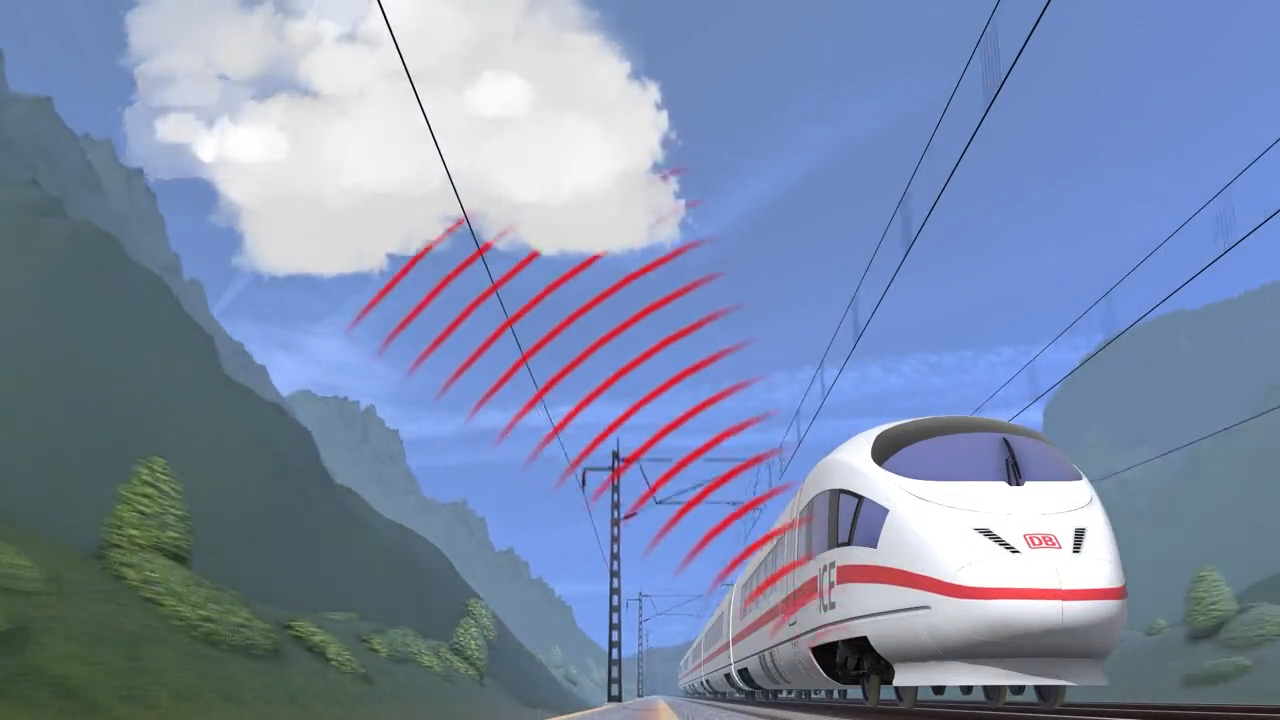
Conventional inspection runs provide valuable information, but consume scarce network capacity and capture track condition at a particular point in time. CTM takes a different approach: equip trains already operating the network with high-precision inertial sensors and turn everyday journeys into continuous real-time infrastructure inspections.
The principle is proven. DB Systemtechnik has been using ASC sensor technology in CTM since 2018, including on high-speed trains travelling at 300 km/h and beyond. Some equipped trains have already covered more than three million kilometers, with ASC’s sensors still running smoothly.
CTM EASy now targets the next hurdle: making that approach significantly easier to scale.
Smart sensor intelligence ‘in a box’
Instead of extensive vehicle-specific cabling, the new solution uses three compact, autonomous Satellite Boxes and a Computing Box mounted close to the wheel-track interface. The system incorporates high-precision ASC inertial sensors, including uniaxial ASC OS-115LN-PG, biaxial ASC OS-215LN-PG capacitive accelerometers and ASC 271 gyroscopes.
Inside those boxes, there is considerable intelligence. Integrated microcontrollers process measurement data locally rather than simply transmitting raw sensor signals. GPS provides precise positioning and synchronization. Bluetooth Low Energy connects the distributed measurement nodes, while LTE enables results to be transferred to the cloud.
The result: no central measurement unit inside the vehicle body, nor are there extensive cables or additional roof antennas. All of which makes it significantly easier to install, certify and scale wireless smart CTM EASy – opening the technology to more trains, rail networks and operators around the globe.
Millimeters matter
However, making installation easier cannot mean compromising measurement quality. CTM EASy helps to establish track parameters including longitudinal level, twist and dynamic direction. Longitudinal level – estimated to account for a vast majority of all track geometry deviations – can be determined at intervals of just two centimeters, independently of train speed.
That places substantial demands on the sensors used and the entire measurement chain: According to EN 13848, cumulative measurement uncertainty must remain below 0.5 millimeters.
For operators, however, the ultimate value lies in what happens with that precision data: more frequent insight into infrastructure condition, earlier identification of changes and better-informed, timely maintenance decisions.
Next stop: testing with customers
The strong response for the co-developed solution at InnoTrans has reinforced the relevance of this approach. DB Systemtechnik and ASC are, therefore, preparing the next testing phase – with the intention of bringing customer requirements and real operational challenges even more directly into further development.
Because ultimately, CTM EASy is not about collecting more data. It is about making high-quality track intelligence easier to obtain – and much simpler to use.
Want to see how the new technology works? Watch our CTM EASy video and take a closer look inside the system.