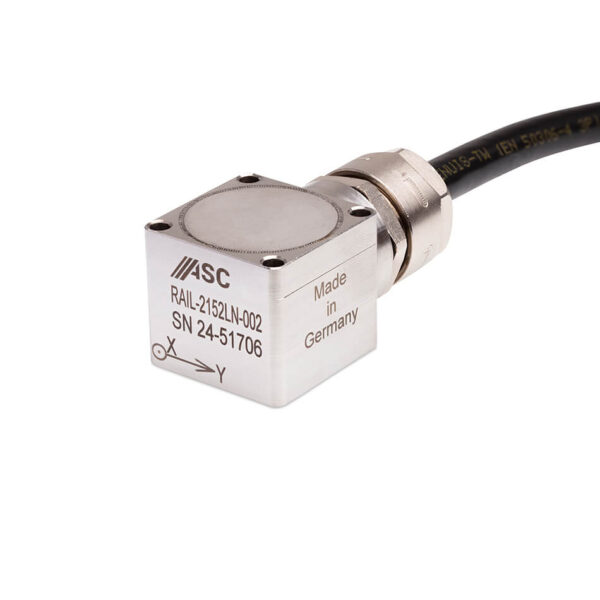
ASC RAIL-2152LN
Biaxial, capacitive
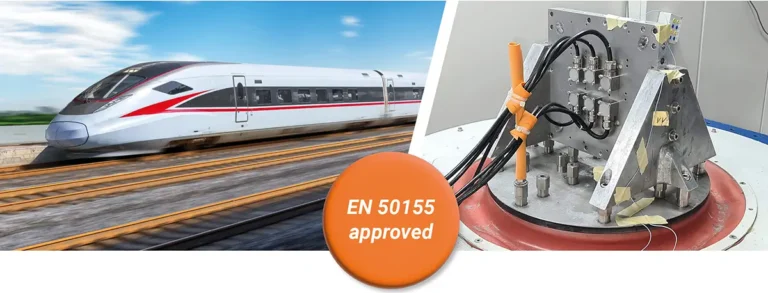
Standards: EN 50155
Measurement range: ±2 to ±400 g
Noise density: 7 to 400 µg/√Hz
Frequency range (±5 %): DC to 1000 Hz

Biaxial, capacitive
Standards: EN 50155
Measurement range: ±2 to ±400 g
Noise density: 7 to 400 µg/√Hz
Frequency range (±5 %): DC to 1000 Hz

Uniaxial, capacitive
Measurement range: ±2 to ±400 g
Noise density: 7 to 400 µg/√Hz
Frequency range (±5 %): DC to 2000 Hz

Triaxial, capacitive
Standards: EN 50155
Measurement range: ±2 to ±400 g
Noise density: 7 to 400 µg/√Hz
Frequency range (±5 %): DC to 1000 Hz

Biaxial, capacitive
Standards: EN 50155
Measurement range: ±2 to ±400 g
Noise density: 7 to 400 µg/√Hz
Frequency range (±5 %): DC to 1000 Hz

Uniaxial, Industrial Grade
Standards: EN 50155
Measurement range: 75 °/s to 900 °/s
Bias stability: 12 °/h
Angular random walk: 0,2 °/√h

Uniaxial, capacitive
Standards: EN 50155
Measurement range: ±2 to ±400 g
Noise density: 7 to 400 µg/√Hz
Frequency range (±5 %): DC to 1000 Hz

Uniaxial, capacitive
Measurement range: ±2 to ±200 g
Noise density: 10 to 680 µg/√Hz
Frequency range (±5 %): DC to 2900 Hz

Uniaxial, capacitive
Measurement range: ±2 to ±200 g
Noise density: 10 to 680 µg/√Hz
Frequency range (±5 %): DC to 2900 Hz
You are currently viewing a placeholder content from Vimeo. To access the actual content, click the button below. Please note that doing so will share data with third-party providers.
More InformationYou are currently viewing a placeholder content from YouTube. To access the actual content, click the button below. Please note that doing so will share data with third-party providers.
More InformationYou need to load content from reCAPTCHA to submit the form. Please note that doing so will share data with third-party providers.
More Information